
Disclosure: As an Amazon Associate I earn from qualifying purchases. How this site works
Ceramic vs PTFE Nonstick
Both work well with the right care.
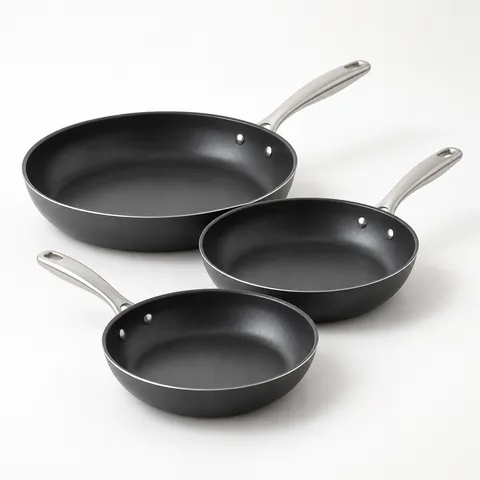 PTFE nonstick pans
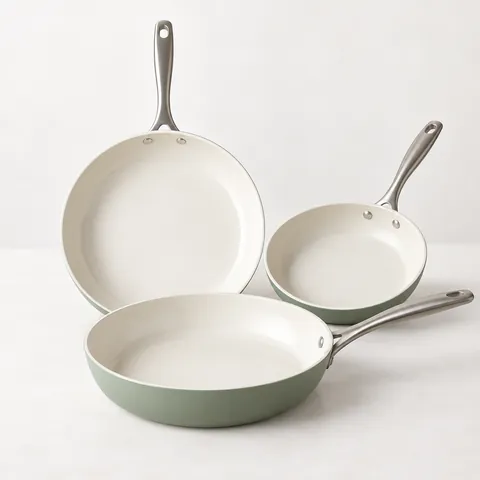 Ceramic nonstick pans
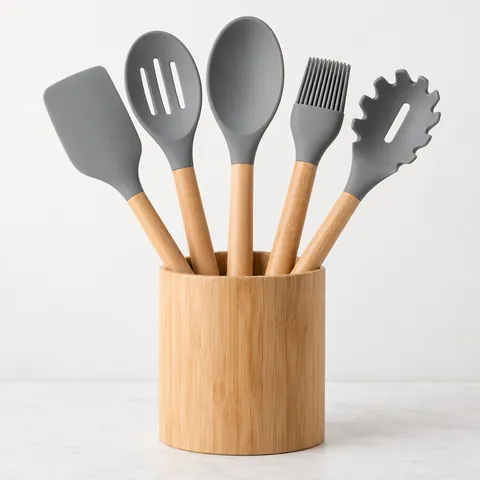 Silicone and wooden utensils
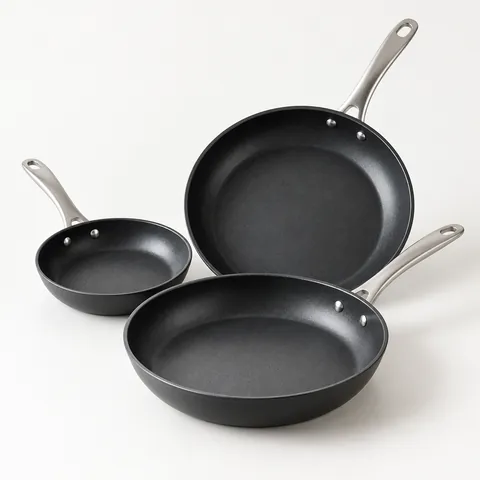 Induction nonstick pans
Side by side
| PTFE | Ceramic | |
|---|---|---|
| Release when new | Excellent | Excellent |
| Release over time | Usually lasts longer | Often fades sooner |
| Heat tolerance | Keep below about 260 °C / 500 °F | Higher, but high heat still shortens life |
| Contains PTFE | Yes | No |
Choosing
- Choose PTFE for the longest-lasting slick release at moderate heat.
- Choose ceramic if you prefer PTFE-free cookware and accept more frequent replacement.
Compare PTFE pans and ceramic pans.
Which coating is better for eggs, fish, and pancakes?
For delicate foods, the main difference is not how slick the pan feels on day one. It is how forgiving the coating is after months of cooking, washing, and storage. Both ceramic and PTFE can release eggs, thin pancakes, and fish fillets when the pan is new and lightly oiled. PTFE usually gives you more margin if you cook often, because it tends to keep its low-friction feel longer when used at moderate heat.
Ceramic can still be a good choice for these foods if you treat it more like a lower-heat specialty pan. Use a little butter or oil, let the food set before moving it, and avoid dry cooking sprays that can leave a sticky film. If your main goal is the easiest possible omelet pan, compare PTFE nonstick pans. If your main goal is avoiding PTFE, compare ceramic nonstick pans and plan to be gentler with heat and cleaning.
| Cooking task | PTFE is usually better when | Ceramic is usually better when |
|---|---|---|
| Eggs and omelets | You cook eggs often and want the most forgiving release | You use lower heat and are willing to add a small amount of fat |
| Fish fillets | You need easy release for fragile skinless pieces | You cook carefully and do not scrape or flip with metal tools |
| Pancakes and crepes | You want even release through repeated batches | You keep heat moderate and wipe away residue between batches |
| Searing meat | You only sear at moderate heat and do not chase a cast-iron style crust | You accept that high heat can shorten the coating life |
Is ceramic or PTFE safer for everyday cooking?
Used as directed, both types are meant for normal stovetop cooking. The practical safety issue is overheating. Nonstick pans are not the right tool for empty high-heat preheating, broiling, or hard searing over maximum heat. A pan can get very hot quickly when empty, especially on gas, induction, or a large burner.
PTFE cookware should be kept below the maker’s temperature limit. Many care labels also tell you not to use it under a broiler or on very high heat. If PTFE is overheated, it can give off fumes, and pet birds are especially sensitive to cooking fumes. If you keep birds, follow veterinary guidance and consider using non-PTFE cookware in a well-ventilated kitchen.
Ceramic nonstick is often marketed as PTFE-free, but it is not the same as a solid ceramic dish. Most ceramic nonstick pans are metal pans with a silica-based coating. The coating can tolerate normal cooking heat, but high heat still wears it faster and can burn oils onto the surface. That burned-on film is one reason a ceramic pan may start to feel less nonstick even when the coating is not visibly scratched.
- Do not heat either type empty for more than a short moment.
- Match the burner size to the pan base so flames or heat do not climb the sides.
- Use low to medium heat for eggs, pancakes, and reheating.
- Ventilate the kitchen when cooking with any pan, especially at higher temperatures.
- Skip the broiler unless the manufacturer clearly says the pan and handle are broiler-safe.
- Follow the lowest limit listed for the pan, handle, lid, and coating.
How do you make either nonstick coating last longer?
Most nonstick wear comes from heat, abrasion, and residue. You can extend the useful life of either coating by changing a few habits. The goal is to protect the slick surface, not to scrub it back to new after every meal.
- Start on low or medium heat. Add oil, butter, or food before the pan gets too hot.
- Use silicone, nylon, or wood utensils instead of metal. If your current tools are rough or chipped, replace them with silicone and wooden utensils.
- Avoid aerosol cooking sprays unless the pan maker specifically allows them. They can leave a stubborn film that hurts release.
- Let the pan cool before washing. A sudden temperature change can stress the pan and may warp thinner bases.
- Wash with a soft sponge and mild dish soap. Do not use steel wool, abrasive powders, or the rough side of a heavy-duty scrub pad.
- Remove brown oil residue early. Soak with warm soapy water, then wipe gently. Do not try to polish the coating like stainless steel.
- Store with a pan protector, towel, or paper plate between stacked pans so the base of one pan does not rub the coating of another.
- Use a different pan for tasks that need high heat, such as blackening, dry toasting spices, or hard searing.
Dishwasher labels deserve caution. Some pans are listed as dishwasher-safe, but hand washing is still gentler. Dishwasher detergent, rack contact, and repeated hot cycles can dull the surface or shorten the coating’s useful life. If you want the pan to stay slick as long as possible, hand wash it even when the box says dishwasher-safe.
What should you check before buying ceramic or PTFE?
The coating is only one part of the pan. A good nonstick pan also needs a flat base, comfortable handle, and the right size for your burner. A thin pan can heat fast but may be more prone to hot spots and warping. A heavier pan usually feels steadier and spreads heat better, but it can be harder to lift and toss.
- Stovetop compatibility: If you cook on induction, look for a magnetic stainless base or a clear induction-compatible label.
- Oven limit: Check the maximum temperature for the whole pan, including the handle and any lid.
- Handle design: A handle should feel secure when the pan is empty and when it is full of food.
- Rim shape: A flared rim helps pour sauces and slide out eggs; a straighter rim can give more cooking surface.
- Weight: Choose a pan you can lift one-handed if you make omelets, pancakes, or sautéed vegetables.
- Size: An 8-inch pan is useful for one or two eggs; a 10-inch pan is a common everyday size; a 12-inch pan gives more room but needs a larger burner.
- Lid fit: If you steam-finish eggs or reheat leftovers, check whether a lid is included or whether you already own one that fits.
- Warranty wording: Read what is excluded. Many warranties do not cover scratches, overheating, staining, or normal coating wear.
Be careful with label shorthand. “PFOA-free” does not mean the pan is ceramic, and it does not mean PTFE-free. “Ceramic” does not mean the pan is made entirely from ceramic material. “Metal utensil safe” does not mean metal tools are the best choice if you want the coating to last. Treat those claims as starting points, then read the care instructions before deciding.
Also think about replacement style. If you cook daily and want predictable release, you may prefer one good everyday skillet and a backup stainless or cast iron pan for high heat. If you cook only occasional eggs or pancakes, a ceramic pan may serve that role well as long as you do not expect it to replace every pan in the kitchen.
Can you use nonstick pans for high-heat cooking?
Nonstick pans are best for lower- and medium-heat jobs. They are not the best choice for a steakhouse crust, wok-style stir-fry, or broiler cooking. Even if a coating can survive a short exposure to higher heat, repeated high heat usually shortens the life of the pan.
For browning, you can still cook successfully in nonstick by using patience instead of maximum heat. Pat food dry, use a small amount of oil, avoid crowding, and let moisture cook off before turning. If you want deep browning or fond for pan sauce, stainless steel, carbon steel, or cast iron is usually the better tool.
Frequently asked questions
Does ceramic nonstick last as long as PTFE?
Usually, no. Ceramic can work very well when new, but its slick feel often fades sooner, especially with high heat, cooking spray buildup, or abrasive cleaning. PTFE is usually the better choice if long-lasting release is your main priority.
Is ceramic nonstick the same as Teflon?
No. Teflon is a well-known trade name associated with PTFE-type nonstick coatings, while ceramic nonstick is generally a PTFE-free coating applied to a metal pan. Always read the product description because marketing terms can be vague.
Can scratched nonstick pans still be used?
A light surface mark is different from peeling, flaking, or deep gouging. If the coating is coming off, the pan no longer performs as intended and should be replaced. Scratches also make food stick more and make cleaning harder.
Why did my ceramic pan stop being nonstick?
Common causes are high heat, residue from oils or cooking sprays, dishwasher wear, and abrasive cleaning. Try soaking the pan in warm soapy water and wiping it with a soft sponge. If release does not improve, the coating may simply be worn.
Do you need oil in a nonstick pan?
A small amount of oil or butter usually improves release and browning, even on a nonstick surface. It also helps prevent dry hot spots. Use less fat than you would in stainless steel, but do not assume the pan has to be used completely dry.
Disclosure: As an Amazon Associate I earn from qualifying purchases. This site may earn a commission when you buy through its links, at no extra cost to you. Product details come from public manufacturer information; always check the merchant page for current specifications and prices. We have not hands-on tested the products described here.